Whole Brain Education
for Young Children
A Parent's Guide to Nurturing Your Child's Natural Potential
The first seven years of your child's life are extraordinary. Every cuddle, song, story, smile and conversation shapes how they think, feel and learn. Whole Brain Education works with your child's natural development — not against it.

What Is Whole Brain Education?
Whole Brain Education is a balanced approach to early learning that nurtures creativity, language, thinking, memory, sensory awareness and social skills. Rather than pushing early academics, it strengthens the foundations that make learning easier — and more joyful — later.
At BrightRight Academy, we gently nurture both the logical and creative sides of the brain through meaningful, age-appropriate experiences.
Visual learning with picture cards
Sensory exploration
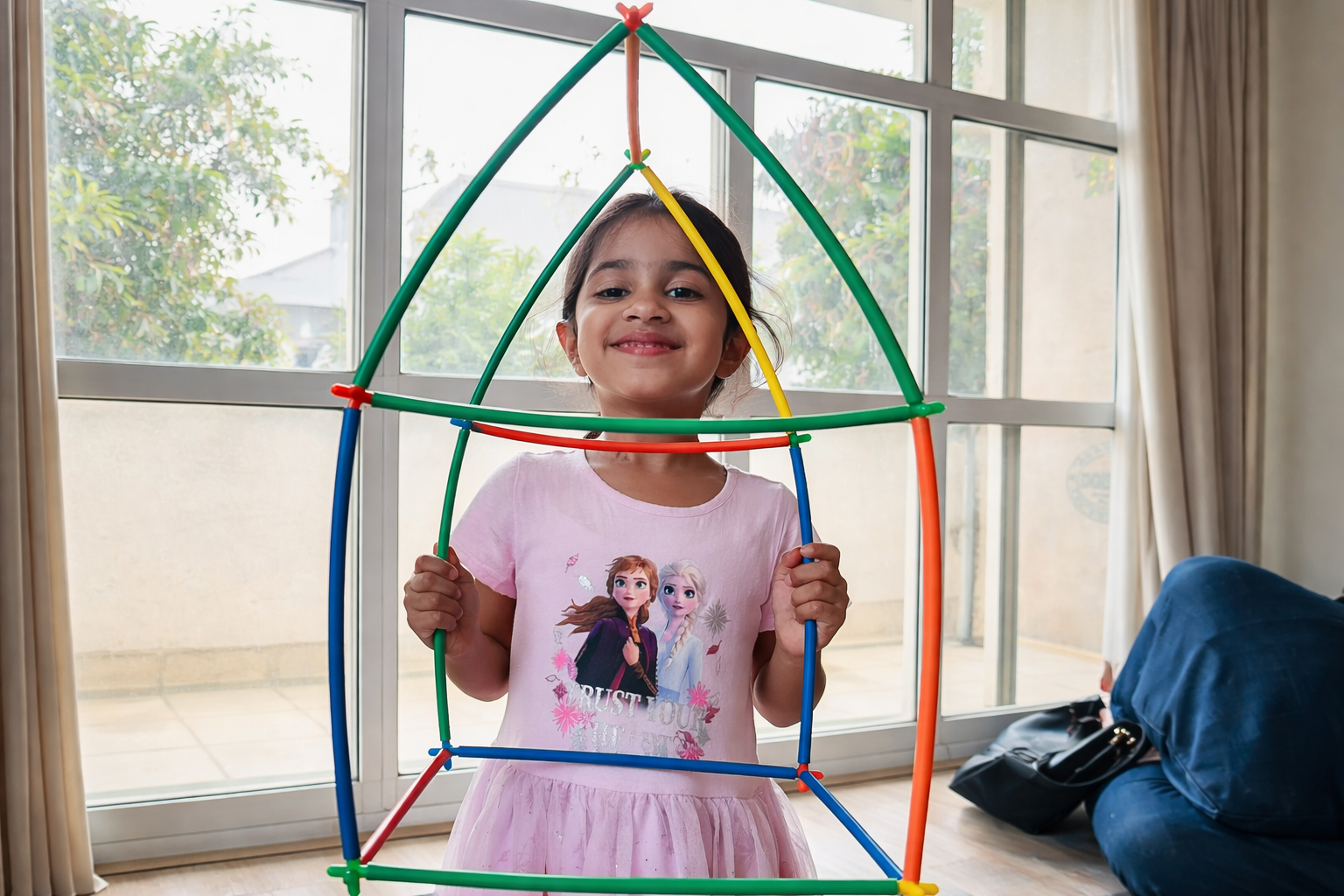
Hands-on learning
Memory & intuition building
Storytelling & imagination
Music & rhythm activities
Movement-based learning
Early multilingual exposure
Parent–child connection

Why the Early Years Matter
In the first seven years, the brain forms neural connections at an extraordinary pace. Research shows that responsive relationships and rich experiences — including play, music, movement, sensory exploration and language — strengthen brain architecture for memory, creativity, learning and emotional balance.
The brain builds itself through experience, and much of early learning happens subconsciously. Children naturally absorb patterns, behaviour, language and emotional cues without formal instruction. Repeated and varied experiences strengthen neural pathways.
Focus, working memory, self-control and flexible thinking develop rapidly in early childhood. These are the skills that underpin every future learning challenge.
Young children can naturally learn multiple languages. Early exposure helps the brain remain sensitive to sounds and patterns, strengthening memory, attention and cognitive flexibility.
Children learn best when they feel safe, loved and connected. Warm, responsive relationships reduce stress, support healthy brain development, and build confidence, curiosity, resilience, and social understanding.
Benefits Parents Often Notice
Children who experience rich, whole-brain early learning show measurable differences — not just academically, but in how they engage with the world.
Want to see Whole Brain Education in action?
Join us for a free session at BrightRight Academy in Indiranagar, Bengaluru.
Book a Free Session →Whole Brain Development by Age
yrs
Learning happens through bonding, eye contact, music, touch and emotional attunement. Every interaction is a neural building block.
yrs
Children absorb rapidly through pictures, repetition, songs and rhythm. Playful exposure to language lays the groundwork for communication.
yrs
Imagination flourishes. Storytelling, creative arts, role-play and gentle introduction to letters and numbers are ideal at this stage.
yrs
Readiness for structure emerges. Reading, writing and numeracy can be introduced gently while continuing to nurture creativity.

What Whole Brain Education Is and Isn't
- ✕ Pushing early academics
- ✕ Drilling or rote testing
- ✕ Competitive or comparative
- ✕ Neglecting reasoning skills
- ✕ One-size-fits-all instruction
- ✓ Developmentally timed and balanced
- ✓ Led by the child's curiosity
- ✓ Joyful, play-based and experiential
- ✓ Emotionally secure and connected
- ✓ Preparing children for lifelong learning

Your Role as a Parent
You are your child's most powerful teacher. More than any curriculum or material, your calm presence, encouragement and connection matter most.
Preparing Children Not Just for School —
But for Life
When early learning is rich, joyful and connected, the foundations built in these years shape everything that follows.
"Every fun lesson today builds confidence, curiosity, and smart thinking for a brighter tomorrow."
Start Your Child's Journey →Whole Brain Education for Young Children
The first seven years of your child's life are extraordinary. Their brain is growing at an incredible pace — every cuddle, song, story, smile and conversation shapes how they think, feel and learn. Whole Brain Education works with your child's natural development, not against it.
Whole Brain Education
for Young Children
A Parent's Guide to Nurturing Your Child's Natural Potential
The first seven years of your child's life are extraordinary. Every cuddle, song, story, smile and conversation shapes how they think, feel and learn. Whole Brain Education works with your child's natural development — not against it.

What Is Whole Brain Education?
Whole Brain Education is a balanced approach to early learning that nurtures creativity, language, thinking, memory, sensory awareness and social skills. Rather than pushing early academics, it strengthens the foundations that make learning easier — and more joyful — later.
At BrightRight Academy, we gently nurture both the logical and creative sides of the brain through meaningful, age-appropriate experiences. Rather than teaching in isolation, we create experiences where multiple parts of the brain are activated together.
Visual learning
Sensory exploration
Observation development
Imagination & Intuition
Logic & Bridging
Memory enhancement
Music & Rhythm
Hands-on learning
Multilingual exposure
Visualization building
Parent–child connection
Movement-based learning

Why the Early Years Matter
In the first seven years, the brain forms neural connections at an extraordinary pace. Research shows that responsive relationships and rich experiences — including play, music, movement, sensory exploration and language — strengthen brain architecture for memory, creativity, learning and emotional balance.
The brain builds itself through experience, and much of early learning happens subconsciously. Children naturally absorb patterns, behaviour, language and emotional cues without formal instruction. Repeated and varied experiences strengthen neural pathways.
Focus, working memory, self-control and flexible thinking develop rapidly in early childhood. These are the skills that underpin every future learning challenge.
Young children can naturally learn multiple languages. Early exposure helps the brain remain sensitive to sounds and patterns, strengthening memory, attention and cognitive flexibility.
Children learn best when they feel safe, loved and connected. Warm, responsive relationships reduce stress, support healthy brain development, and build confidence, curiosity, resilience, and social understanding.
Benefits Parents Often Notice
Children who experience rich, whole-brain early learning show noticeable differences — not just academically, but in how they engage with the world.

Want to see Whole Brain Education in action at BrightRight?
Join us for a session at BrightRight Academy in Indiranagar, Bengaluru.
Book a class →Whole Brain Development by Age
yrs
Learning happens through bonding, eye contact, music, touch and emotional attunement. Every interaction is a neural building block.
yrs
Children absorb rapidly through pictures, repetition, songs and rhythm. Playful exposure to language lays the groundwork for communication.
yrs
Imagination flourishes. Storytelling, creative arts, role-play and gentle introduction to letters and numbers are ideal at this stage.
yrs
Readiness for structure emerges. Reading, writing and numeracy can be introduced gently while continuing to nurture creativity.

What Whole Brain Education Is and Isn't
- ✓ Developmentally timed and balanced
- ✓ Led by the child's curiosity
- ✓ Joyful, play-based and experiential
- ✓ Emotionally secure and connected
- ✓ Preparing children for lifelong learning
- ✕ Pushing early academics
- ✕ Drilling or rote testing
- ✕ Competitive or comparative
- ✕ Neglecting reasoning skills
- ✕ One-size-fits-all instruction
Your Role as a Parent
You are your child's most powerful teacher. More than any curriculum or material, your calm presence, encouragement and connection matter most.
Preparing Children Not Just for School —
But for Life
"Every fun lesson today builds confidence, curiosity, and smart thinking for a brighter tomorrow."
Start your child's learning journey with us →
Whole Brain Education
for Young Children
A Parent's Guide to Nurturing Your Child's Natural Potential
The first seven years of your child's life are extraordinary. Every cuddle, song, story, smile and conversation shapes how they think, feel and learn. Whole Brain Education works with your child's natural development — not against it.
What Is Whole Brain Education?
Whole Brain Education is a balanced approach to early learning that nurtures creativity, language, thinking, memory, sensory awareness and social skills. Rather than pushing early academics, it strengthens the foundations that make learning easier — and more joyful — later.
At BrightRight Academy, we gently nurture both the logical and creative sides of the brain through meaningful, age-appropriate experiences. Rather than teaching in isolation, we create experiences where multiple parts of the brain are activated together.
Visual learning
Sensory exploration
Observation development
Imagination & Intuition
Logic & Bridging
Memory enhancement
Music & Rhythm
Hands-on learning
Multilingual exposure
Visualization building
Parent–child connection
Movement-based learning
Why the Early Years Matter
In the first seven years, the brain forms neural connections at an extraordinary pace. Research shows that responsive relationships and rich experiences — including play, music, movement, sensory exploration and language — strengthen brain architecture for memory, creativity, learning and emotional balance.
The brain builds itself through experience, and much of early learning happens subconsciously. Children naturally absorb patterns, behaviour, language and emotional cues without formal instruction. Repeated and varied experiences strengthen neural pathways.
Focus, working memory, self-control and flexible thinking develop rapidly in early childhood. These are the skills that underpin every future learning challenge.
Young children can naturally learn multiple languages. Early exposure helps the brain remain sensitive to sounds and patterns, strengthening memory, attention and cognitive flexibility.
Children learn best when they feel safe, loved and connected. Warm, responsive relationships reduce stress, support healthy brain development, and build confidence, curiosity, resilience, and social understanding.
Benefits Parents Often Notice
Children who experience rich, whole-brain early learning show noticeable differences — not just academically, but in how they engage with the world.
Want to see Whole Brain Education in action at BrightRight?
Join us for a session at BrightRight Academy in Indiranagar, Bengaluru.
Book a class →Whole Brain Development by Age
yrs
Learning happens through bonding, eye contact, music, touch and emotional attunement. Every interaction is a neural building block.
yrs
Children absorb rapidly through pictures, repetition, songs and rhythm. Playful exposure to language lays the groundwork for communication.
yrs
Imagination flourishes. Storytelling, creative arts, role-play and gentle introduction to letters and numbers are ideal at this stage.
yrs
Readiness for structure emerges. Reading, writing and numeracy can be introduced gently while continuing to nurture creativity.
What Whole Brain Education Is and Isn't
- ✓ Developmentally timed and balanced
- ✓ Led by the child's curiosity
- ✓ Joyful, play-based and experiential
- ✓ Emotionally secure and connected
- ✓ Preparing children for lifelong learning
- ✕ Pushing early academics
- ✕ Drilling or rote testing
- ✕ Competitive or comparative
- ✕ Neglecting reasoning skills
- ✕ One-size-fits-all instruction
Your Role as a Parent
You are your child's most powerful teacher. More than any curriculum or material, your calm presence, encouragement and connection matter most.
Preparing Children Not Just for School
But for Life
"Every fun lesson today builds confidence, curiosity, and smart thinking for a brighter tomorrow."
Start your child's learning journey with us →
Whole Brain Education
for Young Children
A Parent's Guide to Nurturing Your Child's Natural Potential
The first seven years of your child's life are extraordinary. Every cuddle, song, story, smile and conversation shapes how they think, feel and learn. Whole Brain Education works with your child's natural development — not against it.
What Is Whole Brain Education?
Whole Brain Education is a balanced approach to early learning that nurtures creativity, language, thinking, memory, sensory awareness and social skills. Rather than pushing early academics, it strengthens the foundations that make learning easier — and more joyful — later.
At BrightRight Academy, we gently nurture both the logical and creative sides of the brain through meaningful, age-appropriate experiences. Rather than teaching in isolation, we create experiences where multiple parts of the brain are activated together.
Visual learning
Sensory exploration
Observation development
Imagination & Intuition
Logic & Bridging
Memory enhancement
Music & Rhythm
Hands-on learning
Multilingual exposure
Visualization building
Parent–child connection
Movement-based learning
Why the Early Years Matter
In the first seven years, the brain forms neural connections at an extraordinary pace. Research shows that responsive relationships and rich experiences — including play, music, movement, sensory exploration and language — strengthen brain architecture for memory, creativity, learning and emotional balance.
The brain builds itself through experience, and much of early learning happens subconsciously. Children naturally absorb patterns, behaviour, language and emotional cues without formal instruction. Repeated and varied experiences strengthen neural pathways.
Focus, working memory, self-control and flexible thinking develop rapidly in early childhood. These are the skills that underpin every future learning challenge.
Young children can naturally learn multiple languages. Early exposure helps the brain remain sensitive to sounds and patterns, strengthening memory, attention and cognitive flexibility.
Children learn best when they feel safe, loved and connected. Warm, responsive relationships reduce stress, support healthy brain development, and build confidence, curiosity, resilience, and social understanding.
Benefits Parents Often Notice
Children who experience rich, whole-brain early learning show noticeable differences — not just academically, but in how they engage with the world.
Want to see Whole Brain Education in action at BrightRight?
Join us for a session at BrightRight Academy in Indiranagar, Bengaluru.
Book a class →Whole Brain Development by Age
yrs
Learning happens through bonding, eye contact, music, touch and emotional attunement. Every interaction is a neural building block.
yrs
Children absorb rapidly through pictures, repetition, songs and rhythm. Playful exposure to language lays the groundwork for communication.
yrs
Imagination flourishes. Storytelling, creative arts, role-play and gentle introduction to letters and numbers are ideal at this stage.
yrs
Readiness for structure emerges. Reading, writing and numeracy can be introduced gently while continuing to nurture creativity.
What Whole Brain Education Is and Isn't
- ✓ Developmentally timed and balanced
- ✓ Led by the child's curiosity
- ✓ Joyful, play-based and experiential
- ✓ Emotionally secure and connected
- ✓ Preparing children for lifelong learning
- ✕ Pushing early academics
- ✕ Drilling or rote testing
- ✕ Competitive or comparative
- ✕ Neglecting reasoning skills
- ✕ One-size-fits-all instruction
Your Role as a Parent
You are your child's most powerful teacher. More than any curriculum or material, your calm presence, encouragement and connection matter most.
Preparing Children Not Just for School —
But for Life
"Every fun lesson today builds confidence, curiosity, and smart thinking for a brighter tomorrow."
Start your child's learning journey with us →